Mold Inspection & Testing for Your Home
Request an estimate for an inspection
Is that dark spot mold, or just grime? A musty smell in the basement can leave you stuck, wondering what to do. A mold inspection gives you real answers. A local provider checks your home, looks for moisture, and may take samples for a lab.
Leadershipdecisions Mold Help is a referral service. We connect homeowners in the Chicago area with independent providers in our network who do the inspecting and testing. The provider does the work, and you stay in charge of every choice. A careful inspection protects the home, its value, and your peace of mind. Ask the right questions, compare written quotes, and pick the provider who explains things clearly.
Is That Really Mold?
Dark spots, a musty smell, or bubbling paint can leave you guessing. Good news: you do not have to guess. A local provider can look, test, and tell you what is going on.
You are not overreacting by asking. You are protecting the home.
Why Look Before You Scrub?
It is tempting to grab a bottle of cleaner. Hold on. Scrubbing can stir up spores and wipe away clues. It also ignores the real problem, which is moisture.
An inspection finds where the water is coming from. Fix the source, and the mold loses its reason to come back.
Want to talk through what you are seeing? Request a callback to check provider availability.
Which Signs Are Most Urgent?
Some signs deserve a quick look. Start here:
- Standing water or a wet spot that keeps growing
- A sump pump that failed during a storm or spring flood
- Ceiling stains after a hail or roof leak
- Growth that covers more than a small patch
- A strong musty smell that returns after cleaning
Many providers can respond quickly when water is still active. Availability varies, so ask.
When Does an Inspection Make Sense Even Without Urgency?
Sometimes there is no leak, but you still wonder. An inspection also helps when you are buying or selling a home. It helps after a past flood. It helps when a basement always smells damp.
Older frame houses, bungalows, and ranch homes with full basements often have hidden damp spots. Cold winters and humid summers do the rest. A calm check now is cheaper than a surprise later.
What Happens During a Mold Inspection?
The provider usually starts with questions. Where is the smell? When did you notice it? Has there been a leak?
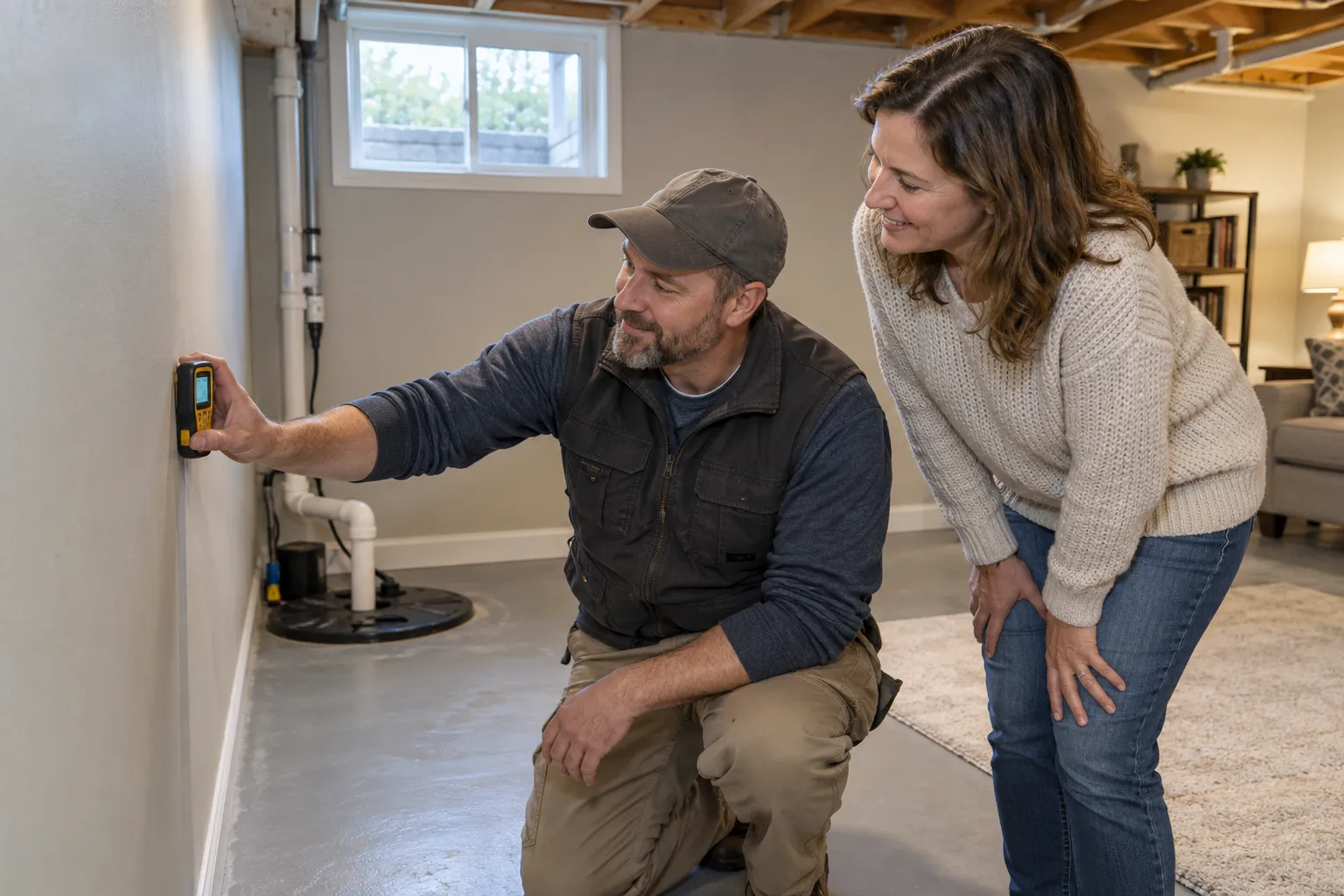
Then they walk the home. They check basements, attics, crawl spaces, and around windows. Most use a moisture meter. Some use a thermal camera to spot cool, wet areas behind walls.
You should get a clear explanation of what they found and why.
What Types of Mold Testing Are There?
Testing is not always needed. When it is, a provider may use one or more of these:
- Air samples: show what spores are floating in a room, often compared with outdoor air.
- Surface samples: a swab or tape lift from a stain.
- Bulk samples: a small piece of material, such as drywall.
Samples go to a lab. Ask about certified mold testing: what credentials the inspector holds, and whether the lab is accredited.
Do I Need Testing, or Is Looking Enough?
If mold is plainly visible, a sample may add little. You already know it is there. Testing helps when you smell it but cannot see it. It also helps when you want to know the type or compare rooms.
A good provider tells you honestly when a test is not needed.
How Do I Read My Results?
A lab report can look confusing. Here is the simple version. It lists the types of mold found and how many spores per sample. The provider should explain what is normal for your area and what stands out.
There is no single magic number that means safe or unsafe. Ask the provider to walk you through it, and to connect the results to the moisture they found.
If anyone in your home has health concerns, talk with a doctor too.
Should the Inspector Also Do the Cleanup?
This is a fair question. Some homeowners like one provider for both steps. Others prefer to have the inspection done separately, so the report comes from someone who is not selling the cleanup.
Neither choice is wrong. Ask each provider how they handle it, and get the plan in writing. If cleanup is needed, residential mold removal has its own steps and its own page.
Ready to compare options? Request an estimate and see what providers in our network offer.
How Should I Get Ready?
A little prep helps the visit go smoothly:
- Write down where you smell or see problems
- Note past leaks, floods, or roof repairs
- Clear a path to the basement, attic, and crawl space
- Keep windows closed and fans off before air testing, if asked
- Gather any earlier reports or repair receipts
What Should I Ask the Provider?
Ask the right questions. Here are a few, plus what a good answer sounds like:
- What will you check? A clear list: moisture, hidden areas, and likely water sources.
- How will you test, and why? A reason tied to your home, not a standard package.
- Where do samples go? An accredited lab, named plainly.
- What will the report include? Findings, photos, and next steps in writing.
What Are the Red Flags?
Watch out for a provider who:
- Pushes a big package before seeing the home
- Says every home has a dangerous problem
- Will not give a written quote
- Cannot explain the results in plain words
Trust your gut. A careful provider is happy to answer.
What About Insurance?
Some policies may cover sudden damage, such as a burst pipe. Slow leaks are often treated differently, so check your policy. Providers can often help document damage for a claim. Keep photos and reports.
What Is the Next Step?
You have the questions. Now get a clear picture of your home. Request a callback to check provider availability, or request an estimate.
What's Included
Moisture Check
The provider looks for damp spots and leaks behind walls, in basements, and in attics.
Air and Surface Sampling
When needed, samples are taken and sent to a lab for clear answers.
Written Report
You receive findings, photos, and next steps, so you can plan with confidence.
Plain Answers
The provider explains what they found, what it means, and whether cleanup is needed.
What Does a Mold Inspection Typically Cost?
Prices vary with home size, how many samples are taken, and where you live. These are typical U.S. ranges only. Always get a written quote before work begins.
| Item | Typical range | Notes |
|---|---|---|
| Visual inspection only | $300 – $600 | Moisture meter and walk-through, no lab samples |
| Inspection with air samples | $450 – $1,000 | Often includes an outdoor comparison sample |
| Single surface sample | $50 – $150 | Swab or tape lift from one stain |
| Thermal moisture mapping | $200 – $500 | Helps find hidden damp areas |
| Large home or crawl space and attic | $600 – $1,500 | More rooms and more samples raise the price |
| Clearance test after cleanup | $250 – $700 | Confirms the area is ready to rebuild |
How It Works
Share What You See
Tell the provider about smells, stains, leaks, and when you first noticed them.
Walk-Through Check
The provider inspects key areas and uses tools to find moisture.
Testing, If Needed
Samples may be taken and sent to a lab for results.
Review the Written Report
Go over the findings together and decide on next steps.
Why Call Leadershipdecisions Mold Help
Know Before Acting
A real answer stops you from spending money on cleanup you may not need, or missing a hidden problem.
Find the Source
Inspections look for the moisture behind the mold, so the fix lasts.
Protect Value
A written report shows you cared for the home, which helps at resale.
Choose Wisely
Clear findings help you compare quotes and pick a careful provider.
Other Services
Need mold inspection & testing in Chicago?
Found mold or a musty smell? Tell us what you see and we will point you to a local provider in our network. Request an estimate or email contact@leadershipdecisions.living.
No obligationMold Inspection & Testing FAQ
How do I know if I need a mold inspection?
Consider one if you smell mustiness that will not fade, see spreading stains, or had a leak or flood. It also makes sense before buying or selling a home. A provider can tell you if testing is needed.
Can I just use a mold test kit from the store?
Kits can show that spores exist, but spores are in every home. They do not find the moisture source or explain the amount. A provider's inspection gives you context.
How long does a mold inspection take?
Many visits run a couple of hours, depending on home size and how many areas need checking. Lab results usually take a few days. Ask the provider for their timeline, since it varies.
Tell us what happened
Found mold or a musty smell? Tell us what you see and we will point you to a local provider in our network. Request an estimate or email contact@leadershipdecisions.living.
No obligation