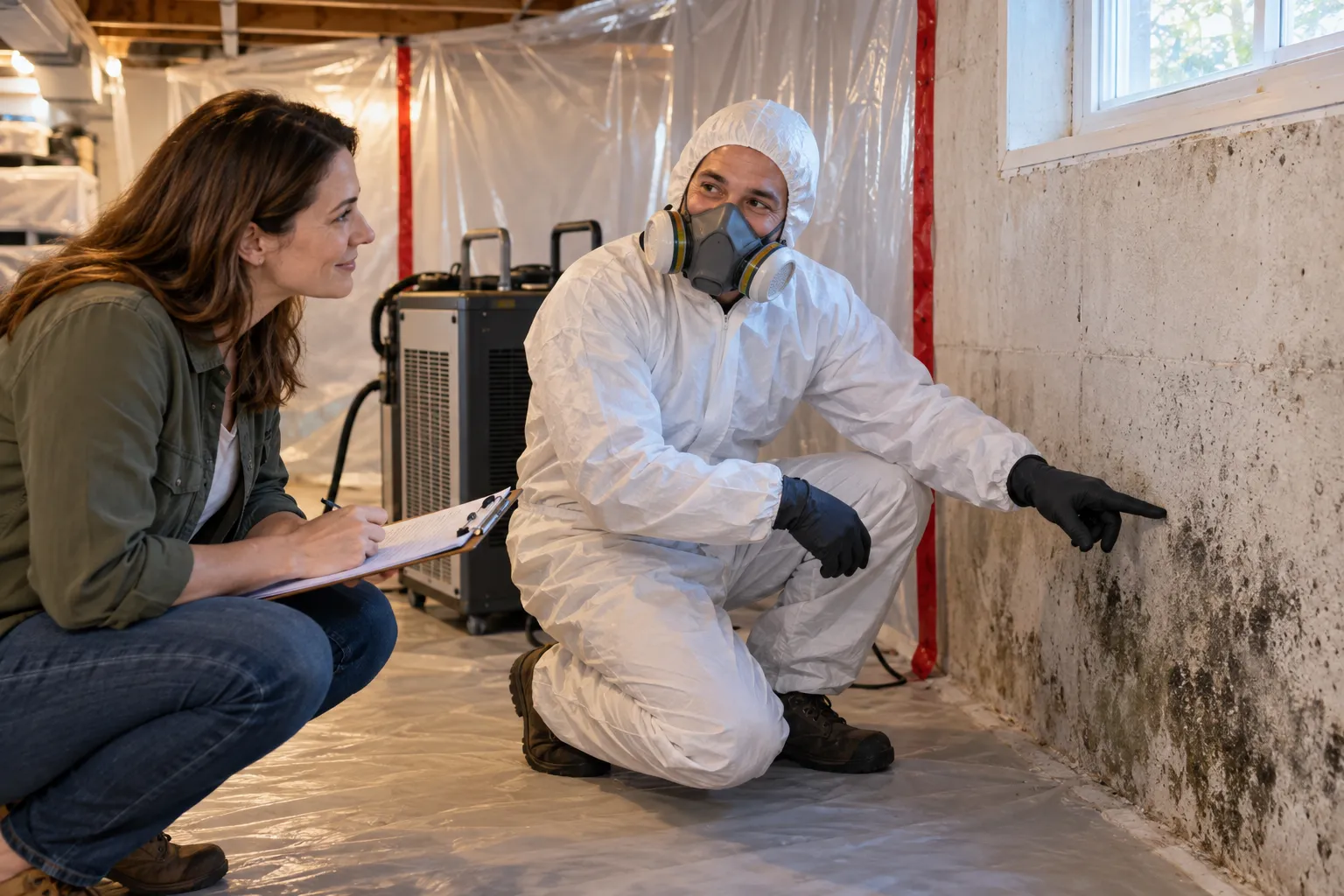
Black Mold Removal for Your Home
Request an estimate from a local provider
Is that dark patch really black mold? Maybe. Many molds look dark, and only testing can say what you have. Either way, a patch that keeps coming back deserves a careful look. Leadershipdecisions Mold Help is a referral service. We connect homeowners in the Chicago area with independent providers who handle residential mold removal.
The provider, not Leadershipdecisions Mold Help, does the work. A good one seals off the area, removes the growth, cleans the air, and looks for the moisture behind it. That last part matters most. Fix the source, and your home stays sound and keeps its value. Use this page to learn the steps, the typical costs, and the questions to ask before you hire.
Found Black Mold? Start Here
You spot dark, fuzzy patches on a wall. What now? First, relax. This is a common problem, and it can be fixed.
Do not scrub it, sand it, or aim a fan at it. That can push spores into other rooms. Close the door if you can. Keep kids, pets, and anyone with breathing trouble away from the area.
What Is Black Mold, Really?
Is every dark mold "black mold"? No. Many types look dark green or black. The one people worry about most is often called toxic black mold. You cannot tell the type by color alone.
That is why certified mold testing can help. A provider can sample the air or the surface and send it to a lab. You get facts instead of guesses. Searching for mold inspection near me is a fine first step, and the provider can explain what the results mean.
Where Does It Like to Hide?
Black mold wants moisture and something to eat. Wet drywall, wood, and paper-backed boards are perfect. In our region, a few spots come up again and again.
- Basement walls and corners, especially near a sump pump pit
- Ceilings under old roof leaks after a hail or storm season
- Bathrooms and laundry rooms with weak fans
- Crawl spaces and attics in older frame houses
- Behind paneling in bungalows and ranch homes
Hot, humid summers and spring flooding make these spots worse. Cold winters add condensation on cold walls and windows.
Is It Safe to Stay in the House?
That depends on how much there is and who lives with you. Small spots on a hard surface are one thing. Large areas, a musty smell through the house, or sick family members are another.
If someone has asthma, allergies, or a weak immune system, talk to a doctor. Ask a provider how to keep the work area sealed off while you decide.
Why Doesn't Bleach Do the Job?
Bleach looks like a quick win. The stain fades, and you feel better. But bleach mostly works on hard, smooth surfaces. Mold roots grow into porous material like drywall and wood. The surface looks clean, and the growth underneath keeps going.
The moisture is still there too. So the mold comes back, often in the same spot. A provider removes or cleans the affected material the right way instead of covering it up.
How Does Black Mold Removal Work?
What happens when a provider shows up? The steps are simple.
Contain the area
They close it off with plastic sheeting. Fans pull air out through filters, so spores stay put.
Remove and clean
Damaged drywall, insulation, or trim comes out and is bagged. Solid surfaces get scrubbed and vacuumed with HEPA filters.
Clean the air and check the work
Air scrubbers run for a while. Some providers then do a follow-up test to confirm the area is clear.
Can It Come Back? Fix the Source
Why did the mold grow here at all? Mold needs water. A leaking pipe, a failed window seal, or a sump pump that cannot keep up can all feed it. If the cause stays, the mold returns.
Fix the source first. A good provider will point out the moisture problem or tell you which trade to call, like a plumber or roofer. Many also suggest simple habits: run a dehumidifier in damp months, vent bathrooms, and keep gutters clear before spring melt.
What About Your Belongings?
Can you keep your couch, books, and clothes? Often, yes. Hard items like glass, metal, and sealed wood can usually be cleaned. Soft, porous items such as mattresses, carpet, and stuffed toys are harder to save.
Ask the provider to explain what can be cleaned and what should go. Take photos before anything is thrown out. Some policies may cover sudden damage, so check your policy. Providers can often help document damage for a claim.
Does This Protect My Home's Value?
Yes, when it is done right. Buyers and inspectors look for mold and water stains. A clear record helps. Keep the written scope, any test results, and proof of the moisture repair. These papers show the problem was handled, not hidden.
What Should You Ask a Provider?
Ask the right questions. You are hiring someone to work in your home, so it is fair to ask.
What a good answer sounds like
- They explain how they will contain the area and protect the rest of the house.
- They talk about the moisture source, not just the mold.
- They give a written quote that lists the work.
- They say whether testing is done by a separate party or by them.
- They welcome questions about licensing and insurance in your state.
Red flags
- Pressure to sign on the spot
- A quote with no details
- A promise that mold will never return
- No plan for containment
- Only spraying or painting over the growth
Ready for the Next Step?
You do not have to figure this out alone. Request a callback to check provider availability in your area. Or send the request form and compare what local providers offer. Take your time, ask questions, and protect the home.
What's Included
Visual Site Assessment
The provider looks at the growth, damp spots, and nearby rooms to plan the job.
Containment and Airflow
Plastic barriers and filtered air machines help keep spores from drifting into clean parts of the house.
Safe Removal
Damaged drywall and other porous material is cut out and bagged, then surfaces are cleaned.
Moisture Source Check
The provider looks for leaks or damp areas that caused the growth and explains what to fix.
What Black Mold Removal Typically Costs
Prices vary a lot with the size of the area, the materials involved, and how hard it is to reach. These are typical U.S. ranges. Always get a written quote.
| Item | Typical range | Notes |
|---|---|---|
| Mold inspection and testing | $300 – $1,000 | Depends on number of samples and lab fees |
| Small area removal (one room) | $500 – $2,500 | Hard surfaces cost less than drywall |
| Larger or multi-room removal | $2,500 – $10,000 | Varies with how far growth has spread |
| Containment and air scrubbers | $500 – $2,500 | Often priced by the days equipment runs |
| Drywall and insulation replacement | $500 – $3,000 | Rebuilding is often a separate job |
| Follow-up clearance test | $200 – $600 | Confirms the area is clean after work |
How It Works
Share Your Situation
Tell us where the growth is, how large it looks, and whether you've had leaks or flooding.
Get Matched Locally
Leadershipdecisions Mold Help connects you with independent providers in the Chicago area who handle this work.
Compare Written Quotes
Ask each provider to spell out the scope, testing, and moisture repair plan.
Choose and Schedule the Work
Pick the provider you trust, confirm the plan, and set a date that suits you.
Why Call Leadershipdecisions Mold Help
Protect Your Home's Value
Proper removal and records show future buyers that the problem was handled correctly.
Real Containment
Sealing off the work area helps keep spores from spreading to the rest of the house.
Root Cause
Finding the moisture source gives the fix a better chance of lasting.
Clear Paperwork
A written scope and test results help you compare providers and keep good records.
Other Services
Need black mold removal in Chicago?
Found mold or a musty smell? Tell us what you see and we will point you to a local provider in our network. Request an estimate or email contact@leadershipdecisions.living.
No obligationBlack Mold Removal FAQ
Is black mold dangerous to have in my house?
It can bother people, especially those with asthma, allergies, or weak immune systems. Symptoms vary. Treat any large growth seriously, limit contact, and ask a doctor about health concerns. A provider can test and remove it safely.
Can I remove black mold myself?
A very small spot on a hard surface may be manageable with proper gloves and a mask. Larger areas, or growth in drywall, are better left to a provider because cleaning can spread spores through your home.
How do I know if I need certified mold testing?
Testing helps when you smell mold but see nothing, are unsure of the type, or want proof the work succeeded. Ask a local provider whether sampling makes sense for your situation.
Tell us what happened
Found mold or a musty smell? Tell us what you see and we will point you to a local provider in our network. Request an estimate or email contact@leadershipdecisions.living.
No obligation