Mold Questions, Answered Simply
What people ask us
How do I choose a mold remediation provider near me?
Start by asking the right questions. Does the provider give a written scope of work? Do they explain how they will contain the area and fix the source of moisture? Can they share proof of license and insurance where your state requires it? A good provider answers clearly and does not rush you. Leadershipdecisions Mold Help connects you with independent providers in our network, but you choose who does the work.
Do I need mold testing before removal starts?
Not always. If you can see mold and know why it is there, a provider may skip straight to a plan. Testing helps when you smell mustiness but see nothing, or when you want a clear before and after record. Ask whether testing is needed for your case. A careful provider explains the reason instead of just adding a step.
Is black mold really more dangerous than other mold?
Color alone does not tell you much. Many molds look dark, and only a lab can name the type. What matters more is how much mold there is and who lives in the home. Stay calm, limit contact, and have a local provider look at it. Anyone with asthma or allergies should be extra careful.
What should I expect when a provider comes to my house?
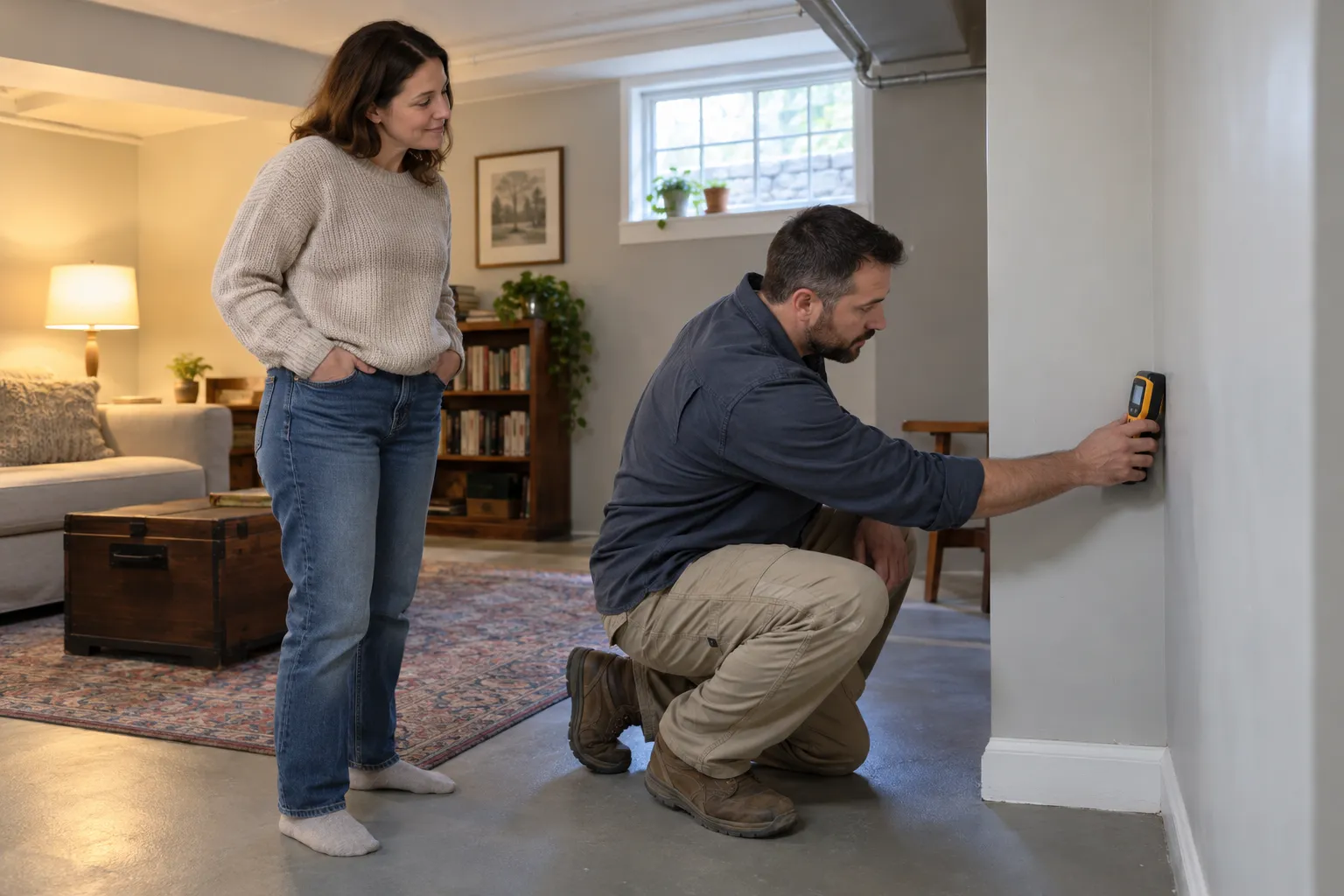
Expect questions first. The provider will ask about leaks, floods, or musty smells, then look at the area. In basements, they may check near the sump pump, walls, and floor edges. They may use a moisture meter. Afterward, you should get a written quote that lists the work, the area, and how they will fix the source.
Is it safe to stay in my home during mold cleanup?
It depends on the size and spot of the problem. Small, contained jobs are often fine. Larger jobs may call for sealed work areas and air filters. Ask the provider how they will keep spores from spreading to the rest of the house. If anyone at home is sensitive to mold, say so up front and ask about a plan.
Will my homeowners insurance pay for mold work?
It might, but check your policy. Some policies may cover mold that follows sudden damage, like a burst pipe. Slow leaks and flooding are often treated differently, and many policies limit mold coverage. Providers can often help document damage with notes and photos for a claim. Call your insurance company and ask exactly what your policy says.
How much does mold removal usually cost?
Costs vary a lot by job. In the U.S., small spots may run a few hundred dollars, while larger or hidden mold can reach several thousand. Size, location, and repairs after cleanup all matter. Always get a written quote and compare the details, not just the price. Ask what is included.
How do I know the mold won't just come back?
Mold returns when moisture stays. Protect the home by fixing the source: a leak, poor airflow, or damp basement walls. Ask the provider how they will find the cause and what they suggest to keep humidity down. A good plan covers both the cleanup and the cause. Be cautious of anyone who only wipes surfaces and leaves.
Tell us what happened
Found mold or a musty smell? Tell us what you see and we will point you to a local provider in our network. Request an estimate or email contact@leadershipdecisions.living.
No obligation